We are very grateful to Tony Keating for his contribution to the site. There are several references to him which can be found if you type Keating into the search box. He has kindly provided additional information to his contribution which is published below and you should cross-refer this with the earlier entries Notes and… Continue reading Memories of a former resident 1946-60
Tag: Place/The Tannery
The Lavant River
In Sussex dialect a ‘Lavant´ is a winterbourne, which means it only flows during the winter. In C15th documents in the West Sussex Records Office it is also spelt as ‘Louente’ and ‘Lavent’. Most rivers start from a ‘spring’ and gather water from tributaries as they flow downhill.
History of The Tannery (61-65 Westgate)
Residents The Undershill family, who turned out to be tanners, are first recorded in the parish in 1526, when they acquire the share of a lease of 20 acres of land with a house. John Undershill is the earliest documented reference to tanning in St. Bartholomew’s when, in 1549, he witnesses the will of John Parker… Continue reading History of The Tannery (61-65 Westgate)
Westgate Timeline
43CE The Roman Second Legion land at Fishbourne and set up camp on the site which will become the palace of Togidubnus, vassal king of the Regni. Later they march inland under the command of Vespasian, probably along the track which was to become Westgate. They set up a winter camp on the flat plain… Continue reading Westgate Timeline
Hidden Westgate Histories 4: The Westgate Lavant
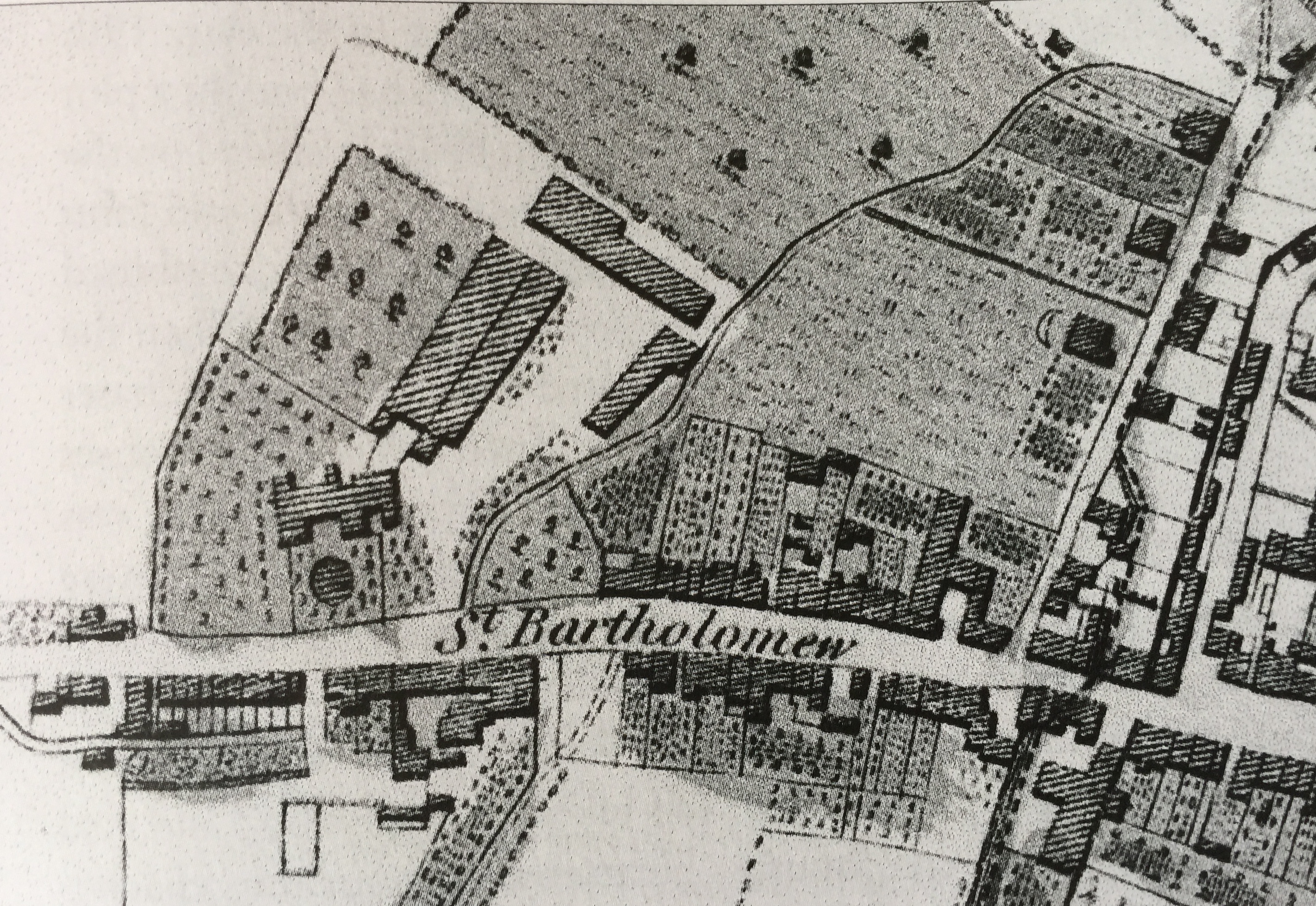
Most residents are familiar with our winterbourne, the River Lavant. Winterbourne because it is a seasonal stream that comes down from the Downs, filtered out of the chalk after the Winter rains.
The Shape of Old Westgate
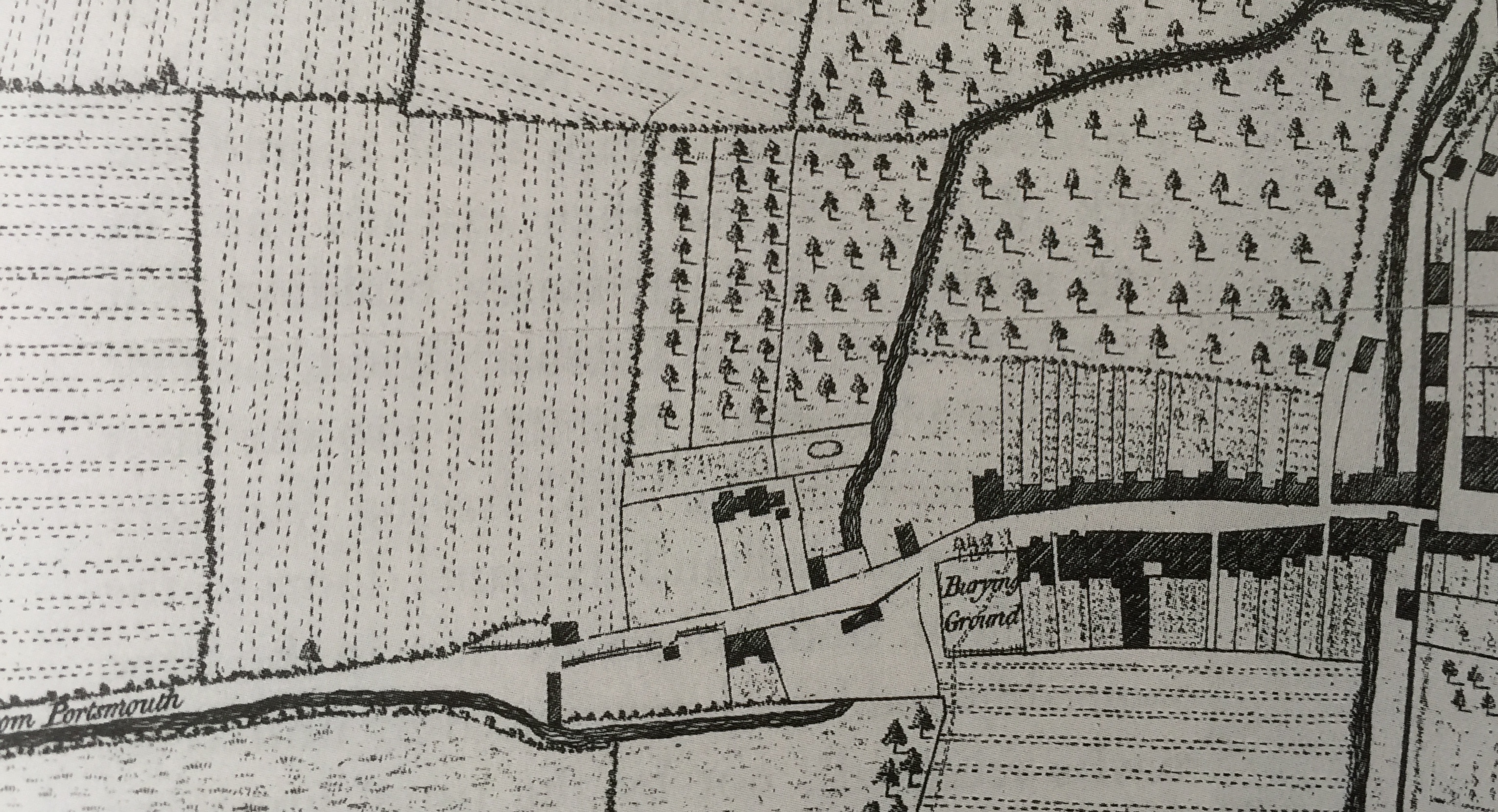
We are grateful to resident John Davies for the following article on the heritage part of our streetscape (the Conservation Area), using earlier research done by the late Dr Latchman which had been passed on to him. The”shape” of Westgate from the old gate through to Parklands Road
Chichester & St Bart’s: The Early Settlement
The extent of Chichester has altered at various times. The settlement was first established as a winter fort for the Second Augustan Legion under Vespasian (the future emperor) shortly after the Roman invasion by Emperor Claudius in AD 43. Like all Roman walled towns, Noviomagus Reginorum was divided into four quarters by two main roads… Continue reading Chichester & St Bart’s: The Early Settlement
Medieval Westgate
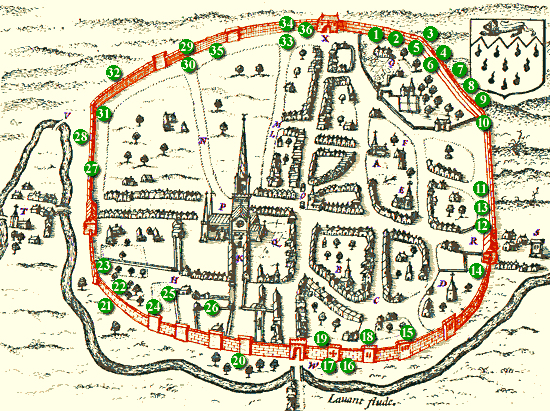
Image courtesy of Chichester Web. This article forms the third in a series on the archaeology of Westgate and is adapted with their permission from an archaeological desk-based assessment prepared by SLR Consulting Ltd on behalf of Chichester College in 2013. The numbers on the map refer to objects mentioned in the text below that… Continue reading Medieval Westgate