This is a narrow house with a third storey, so the roof line is higher than its neighbours. It is an infill property, built at some time after 1642 in the gap between nos. 26 and 30. Not much else is known about the building at the moment.
Continue reading History of 28 WestgateTag: Conservation Area
History of 24 Westgate
From the roof line, this house appears to be one of a pair with No. 26, which was at some point (c1995) converted to a single house intertwined with no 22. This is the smaller of the two properties and timber-framed, as is no 26, whose roof it shares.
Continue reading History of 24 Westgate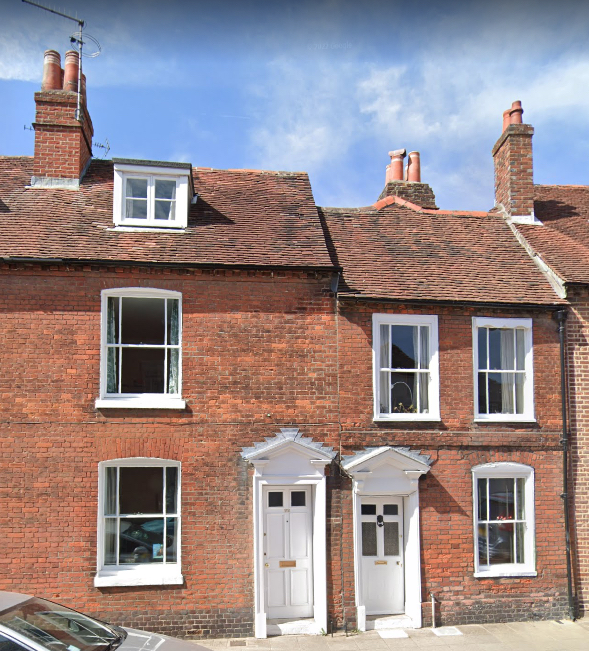
History of 22 Westgate
See more specific data on conjoined nos. 22-24 here and here.
Alan Green in his book on Georgian Chichester writes:
“This is intertwined with no. 24. The smaller of the two is no. 24, which is timber framed and under the same roof as no. 26 to the west.
Continue reading History of 22 WestgateHistory of 20 Westgate
More is currently known of the former occupiers of this property than of the building itself, with a strong connection to local family, the Holts.
John Ogburn Holt Snr. had been born in Chichester on 9th April 1846 at 36 Westgate. By 1891 he was living at number 20 (then 44). In the house with him were his wife Elizabeth also 45, and his children John Ogburn Jnr. (9), twins William George and Emma (3), and Lizzie Helen Mary (1). By 1901 he had moved to 9+11 Westgate over the road.
Continue reading History of 20 WestgateHistory of 18 Westgate
Richmond House – previously York House – was originally two houses and the two front doors can be seen in this photo taken in 1900. It has since been converted to apartments and now has a single front door.
Continue reading History of 18 WestgateHistory of 16 Westgate
Another property in the possession of the Holt family.
John Ogburn Holt Snr, aged 25, had moved in by 1871. He had previously lived with his father and mother at no. 36, where he had been born. He had married Elizabeth Pile. By 1881 they had five children, Bernice (13), Charles John (12), Janice Mary (10), Emma (6), and William George (1).
Continue reading History of 16 WestgateHistory of 12-14 Westgate
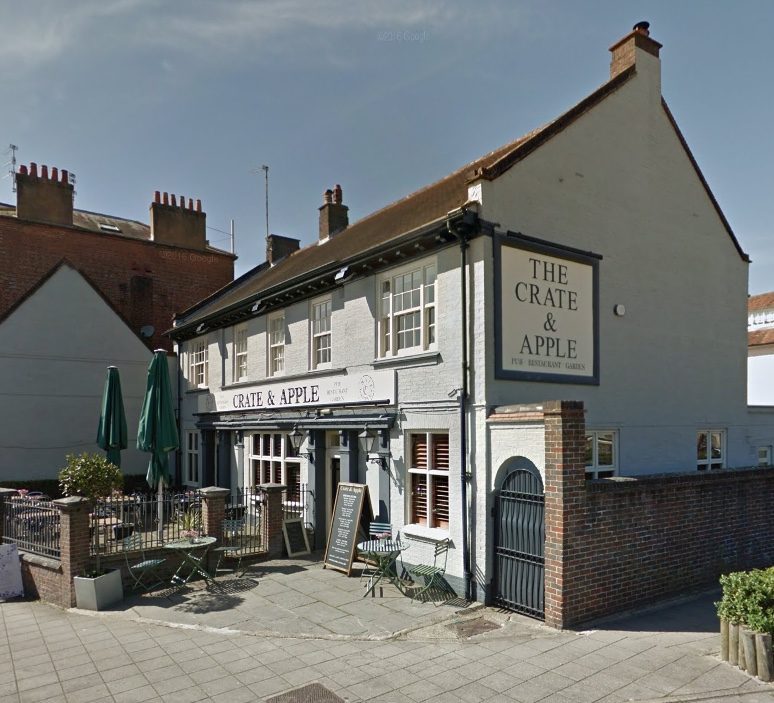
Currently known as the Crate and Apple P.H.
This reopened in its present guise on July 1, 2015, having previously been the ‘Vintage Pub and Bistro’, and before that: No. 12, a restaurant. But for many years it was The Swan, at one time having a reputation as a ’biker pub’.
Hidden Westgate Histories 9: Demolished properties Northside
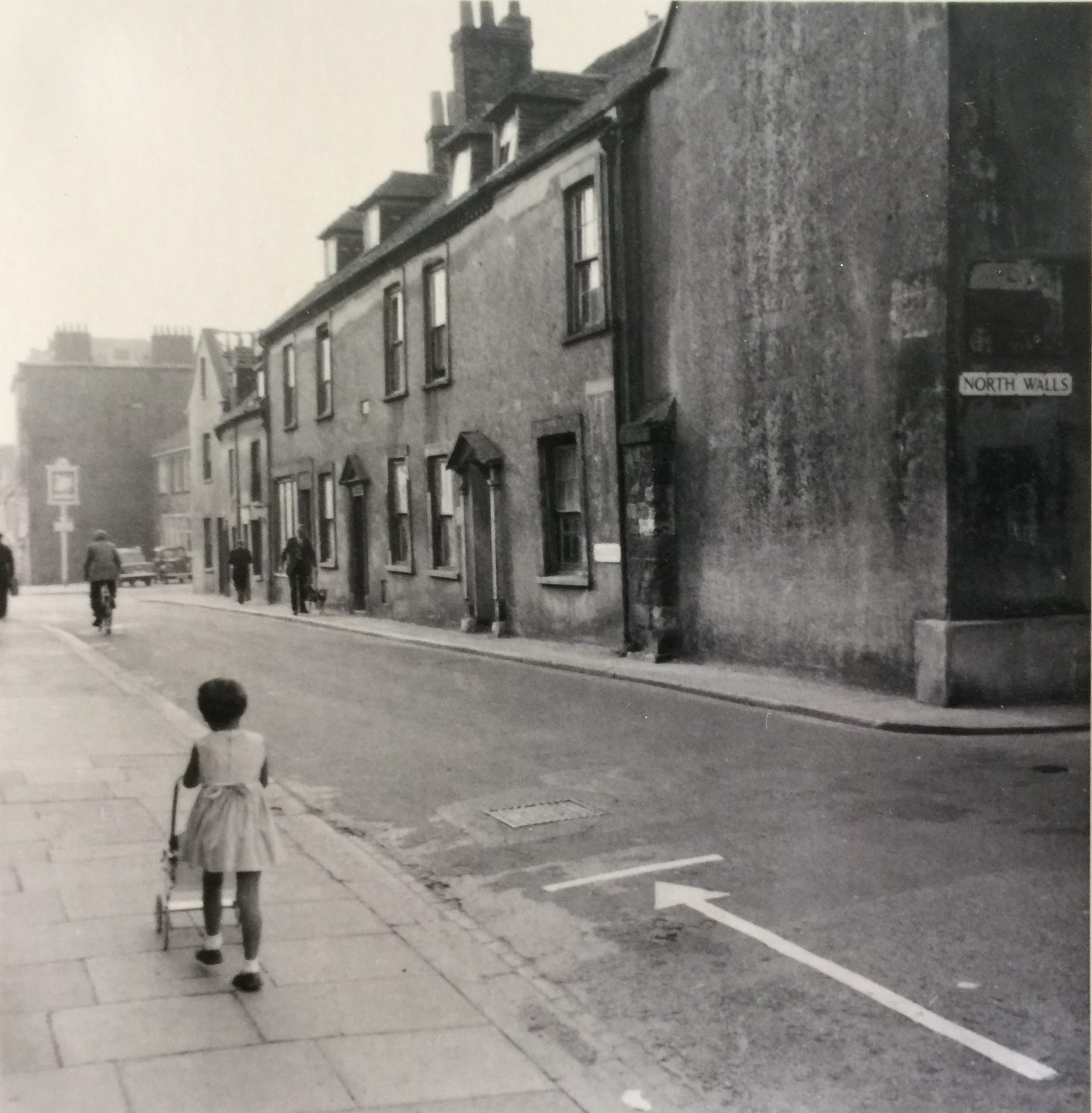
As detailed in Hidden Histories no 8, properties 2-10 were demolished in 1963
Number 8
James JEFFERIES was a private, 2nd Battalion, The Royal Fusiliers. 29th Division when he was killed in action on 15.7.17. In 1911, he was living with his wife Sarah at no. 52 Westgate – the old number, which became 8 and was then demolished in 1963. He was employed as a Hopman at the Brewery. He is buried in the Bard Cottage Cemetery, Ypres, Belgium but memorialised on his wife Sarah’s gravestone, plot 15 in the churchyard of St James’ Church in Birdham. His name is on St Bartholomew’s church war memorial, now the Chichester City Arts Centre.
Continue reading Hidden Westgate Histories 9: Demolished properties Northside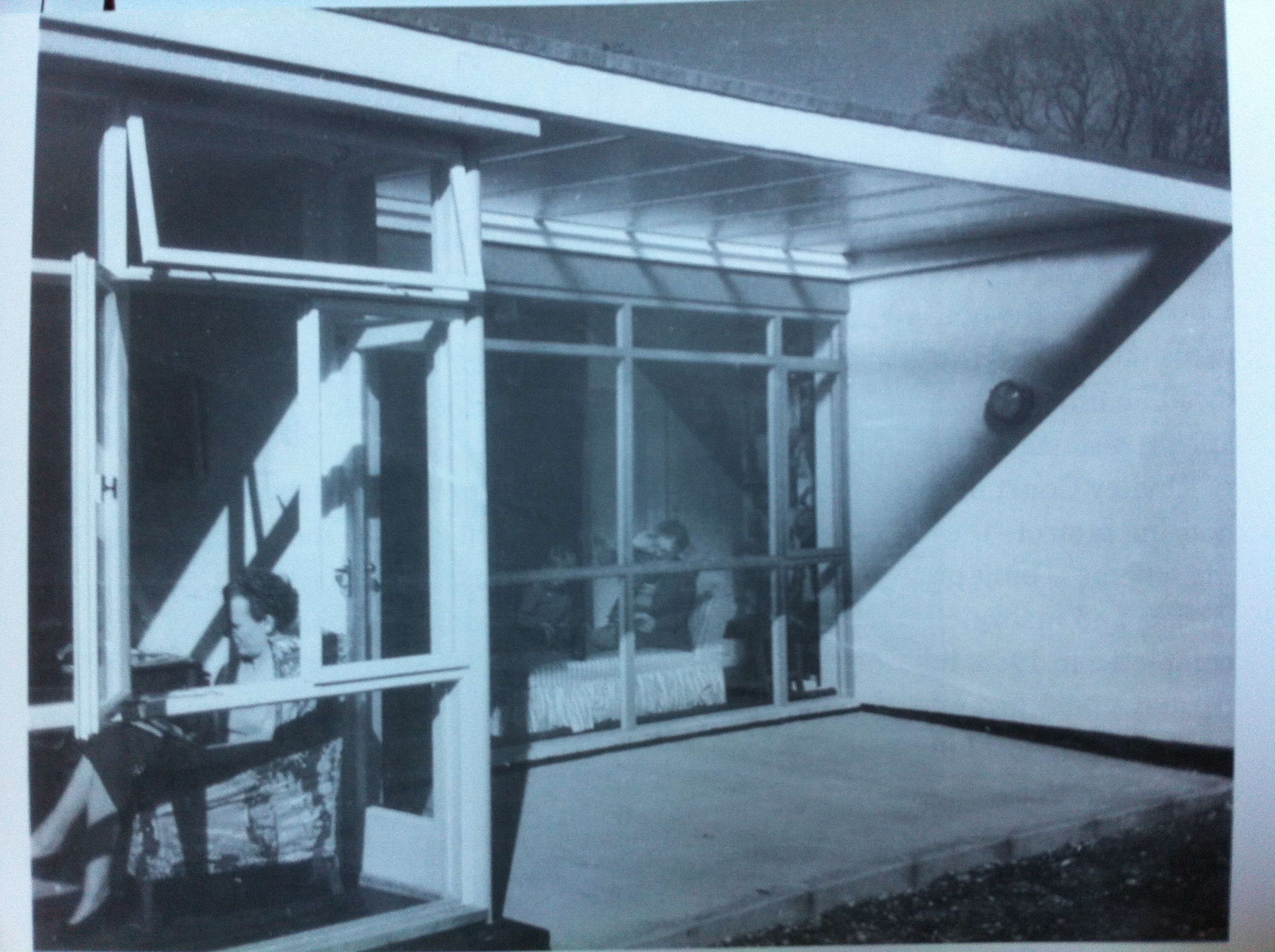
Hidden Westgate Histories 6: The Powell & Moya Bungalows
The eastern end of Westgate seems such a perfect Georgian enclave, yet who would have thought standing in the street today, that Mount Lane has contained iconic 20th century buildings and still has an interior by Eric Gill’s brother?
Powell & Moya architects
Continue reading Hidden Westgate Histories 6: The Powell & Moya BungalowsWestgate’s Listed Buildings
Did you know that Westgate contains 36 listed buildings and walls?
English historic properties and buildings are listed by Historic England (who used to be known as English Heritage). They are the public body that looks after listing England’s historic environment. They champion historic places, helping people to understand, value and care for them, now and for the future. English Heritage still exists but is more a tourism body that promotes the ancient monuments and historic buildings that were in Government trust, much like the National Trust.