John Ogburn Holt, who at some point lived at nos. 7&9 Westgate, acquired a number of properties on Westgate, which he let.
Tag: Georgian
St Bartholomew’s Church (updated)
THE ORIGINAL ST SEPULCHRE’S CHURCH
Colin Hicks writes:
Originally on the site of the graveyard at St Bartholomew’s on the corner of Mount Lane and Westgate, stood a church that was probably built in the 12th century. This was round with a circular apse over the altar, a shape associated with the Knights Templar, so that the church became known as the Temple even though it was never associated with those militant monks. New Fishbourne church was probably a chapelry to St Bartholomew at this time.
The Westgate Brewery (updated)
The following entry is made up of a number of articles about the Brewery assembled from different sources by Richard Brownfield. [Square bracketed numbers and symbols] refer to the footnotes at the end of this post.
From time to time, we bring in a guest writer to add to the content of our website. We are grateful to local historian Alan H. J. Green for his permission to reprint from this article entitled “The Westgate Brewery”, which originally appeared in the Sussex Industrial Archaeology Society Newsletter 137 of January 2008 [*]
History of 23-25 Westgate
Along with no 25, no 23 is one of a pair of workman’s cottages
Roy Morgan writes:
“The house is recorded as far back as 1379 and is also mentioned 1570. The pair of cottages are recorded in Land tax from 1780 and are shown on Gardner’s map of 1797”.
No. 23 specifically occurs twice elsewhere in the story of this street:
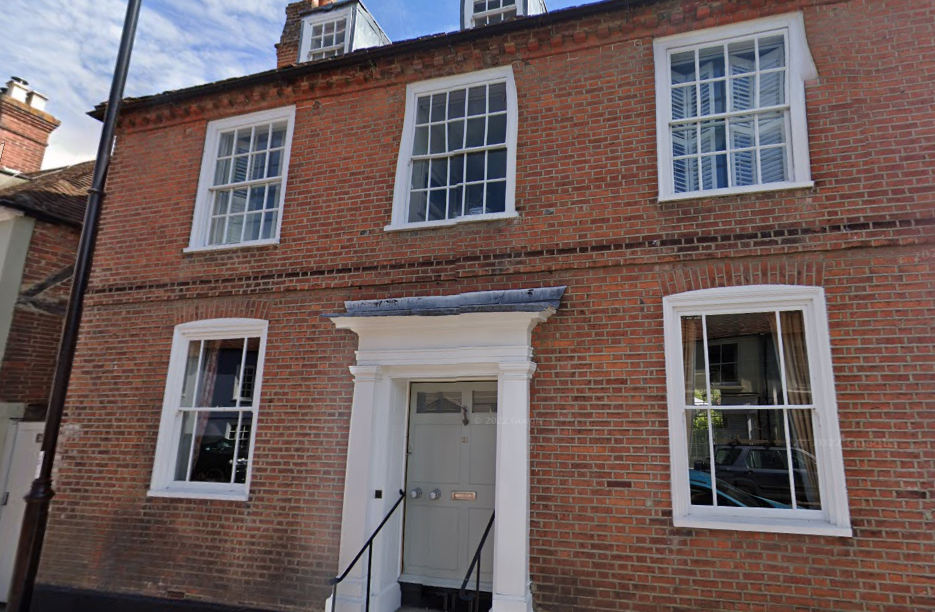
History of 21 Westgate
The history of this property has been constructed by Dr Brownfield from the property’s voluminous Schedule of Deeds, by kind permission of the current owners.
For the uninitiated (like me), “Messuage” was a term that referred to a dwelling house along with its adjacent buildings and the land used in connection. A word from late 14c. Anglo-French, it is thought to be a clerical error for “mesnage” (compare modern Fr ménage which means “household”)
Schedule of Deeds
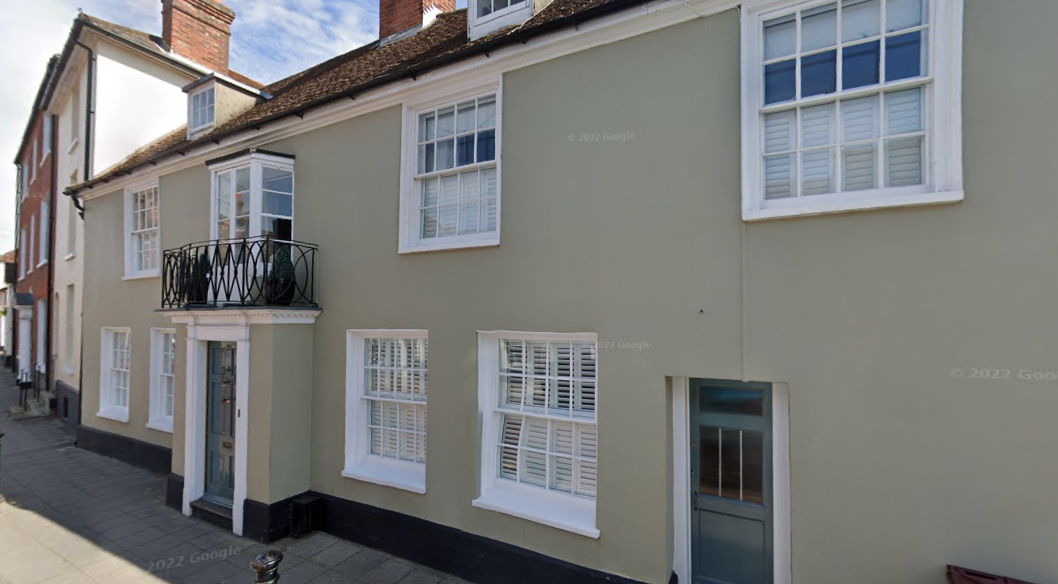
History of 19 Westgate
History of 17 Westgate
Certain sections in this entry are copied with permission from The Building of Georgian Chichester by local historian Alan Green.
The Westgate house bo. 17 “was added to number 15 in about 1787 – on a more modest scale.”
The property “is a typical Regency rebuild. Its three-storey single frontage under a slate roof is stuccoed and the front door is recessed within an elliptical arch and approached by steps up from the street.
History of 15 Westgate
Newly built in 1730, this site had already been occupied by a house, a woodhouse, and a slaughterhouse. A malthouse was added by 1775.
In 1841 James Gates, a Yeoman Farmer aged 65, was living here. In 1861 another James Gates aged 59, a retired butcher who had had a shop in East Street was here. Presumably he was the son of the previous owner. In 1871 he is recorded as an alderman aged 67.
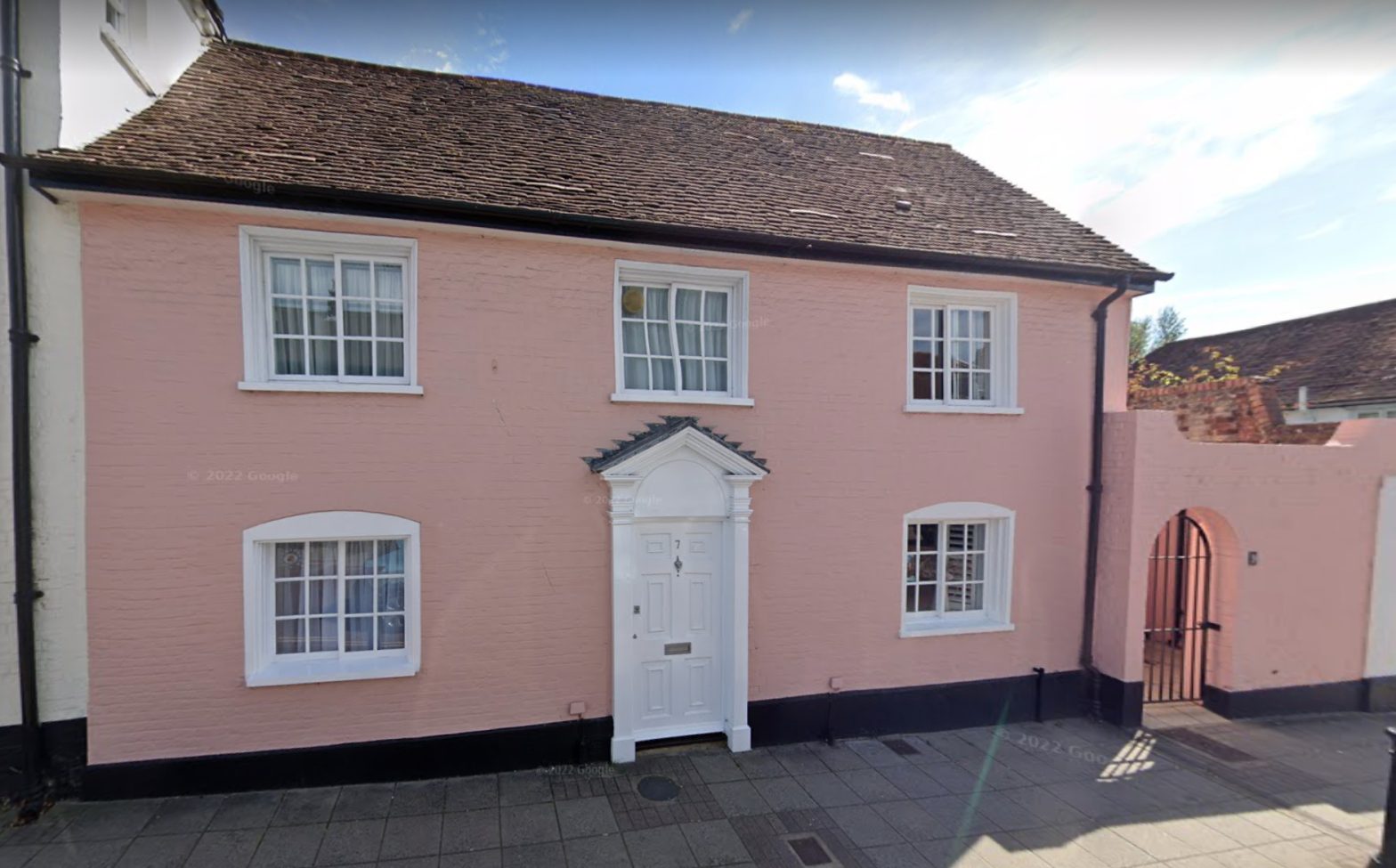
The History of 7-9 Westgate
This article concerns Nos 7 and 9 Westgate, which was a whole house previously known as no.4 and then no. 11 Westgate from 1950 – 1987.
The numbering of the houses in Westgate started in about 1900 and it has been a confusing experience for anyone trying to identify which property is which. In the 1901 census, this house is confirmed as 4 Westgate, a numbering which continued until the 1939-45 war. After the war, the whole street was renumbered, with odd numbers to the south side, and the house became no.11 Westgate. It was then divided into two in 1988 and renumbered at the same time as the rest of “The Georgian Priory” development, to become numbers 7 and 9.