History of 40 Westgate

Formerly number No 34 (1900-1950 numbering)

Known in recent memory as Deering’s sweet shop, this property has been a shop since before censuses began in 1841. At that point it was a bakery already being run by George Hackett, aged 35 and who describes himself as a baker, a recognised trade of trained artisans. He was still there in 1851 census – Hackett, George (55) now titled Master baker – and in 1861 – Hackett, George (66) Master baker. Still working at age 66!
The West End: who lived in your house?

Due to their fairly recent date, finding information about the properties in the 1930s development of Westgate, and the side streets, has proved a challenge except for the few that were built in earlier times. The censuses stop at 1921 for example and we have not trawled the electoral rolls for privacy.

However, we are endeavouring to write up as much of this recent history as is made available. This stops around 1950 to reduce or avoid invading the privacy of current residents.

History of 68 Westgate

These notes on the history of this property are by Anne Sparrow. Historic references are in bold to assist further research.

“When we bought No. 68 Westgate, on the deeds it was noted that it was originally called ‘Westgate Close’ [also “Crantock” in Kelly’s directory 1938 – RNB]. The name appeared on the wooden gate that was seldom used, owing to the regular use by our two cars, which were accommodated in an unusual double garage beneath an adjoining flat.

History of 64 Westgate

Built about 1935 and originally called ‘Pantiles’, this property is situated on one of several parcels of land between Salthill Road and Westgate which had originally belonged to the brewer, George Henty.

We have recorded elsewhere, that in 1780 the founder of the Brewery, William Humphrey (Snr), had bought land in Scuttery Fields (of which you may not know today’s Brewery Field remains a rump), to build some malthouses.

History of 52 Westgate

This large Georgian property was to become part of The Westgate Brewery. 

The Humphreys

In 1780, William Humphrey (Snr) bought land in Scuttery Fields to build some malthouses. The brewery itself was installed on the adjoining site, where today’s no. 52 had stood as a dwelling house since about 1750: the date inscribed on the building is 1751.

History of 48 Westgate

This house was for many years the head brewer or brewery manager’s house and called Brewery House to this day. The following fascinating and very valuable account by a resident of her life in this property, is quoted with permission from the CLHS magazine ‘Chichester History’, no. 23, p41 

THE SLOE FAIR ‘SQUIRTERS’ by Ruth Bagnall (née Randell) 

History of 38 Westgate

More on the Holts. See the entries for nos. 16, 20 and 36 Westgate to complete the picture

As perviously described, John Ogburn Holt, who had lived at nos. 7&9 Westgate, acquired a number of properties on Westgate which he let, of which this was one. He signed a lease on 11th August 1896 for no 35 (old number) for £200, including:

History of 34 Westgate

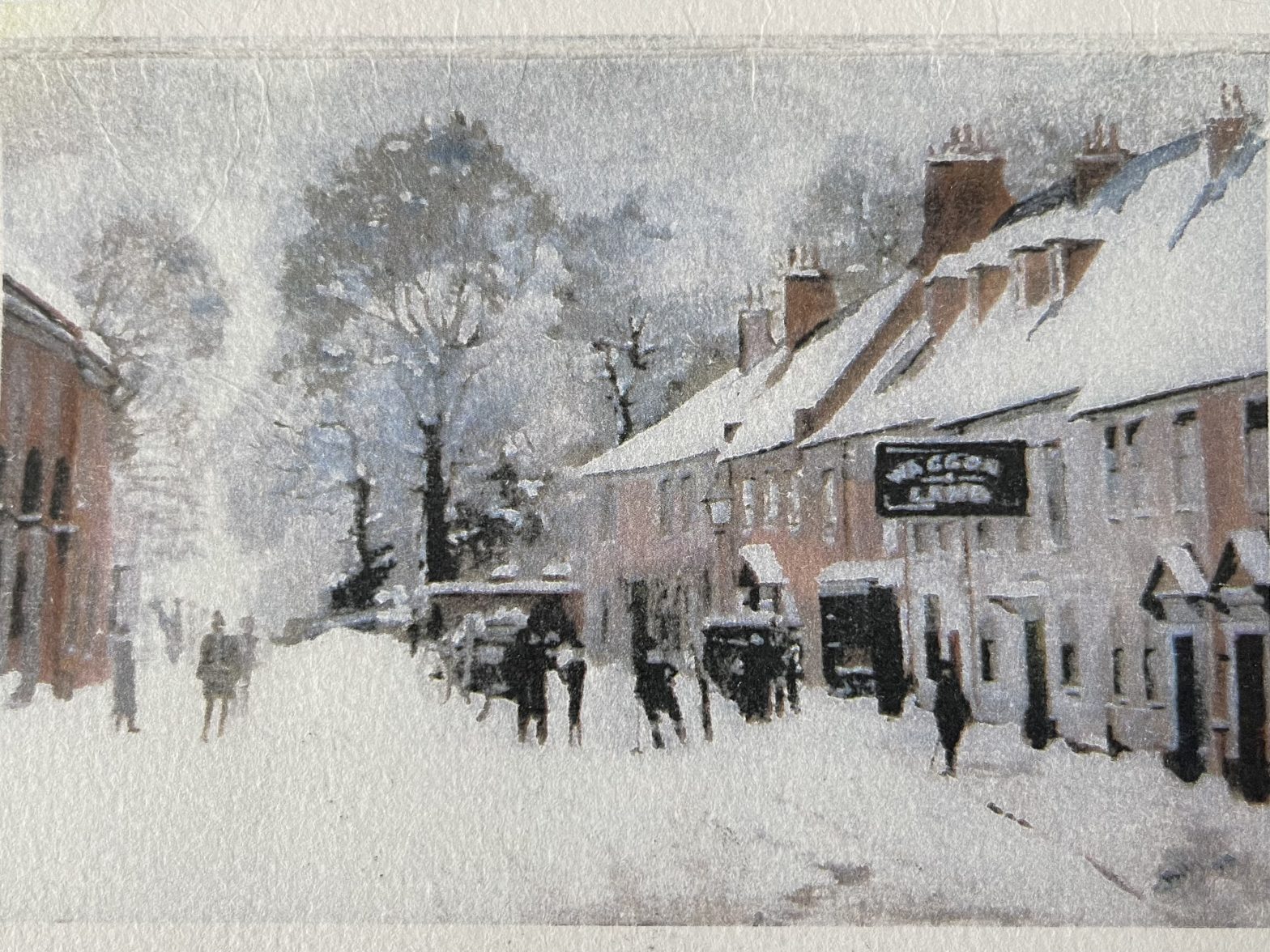
This property is the former “Wagon and Lamb” public house.

A recent owner of the house believed that the original frontage of the house was one room back, with a yard in front of the house for waggons to park; or with the road running further to the north than its current course, thus allowing a yard in front of the farmhouse opposite. If this is correct the new front was added after 1642 and probably when the Georgian rebuilding took place.

History of 32 Westgate

As elsewhere on this website, we are grateful to local historian Alan H J Green for permission to reproduce this report of a visit he made to the property

“No 32 is one of several 17C timber-framed houses on the north side of Northgate, doubtless rebuilt soon after the sack of Westgate by William Waller’s troops in 1642. As with the others in this terrace it received a Georgian brick front in the 18C. It is abutted on the west by the former Waggon and Lamb public house and on the east by another (smaller) house. It was originally numbered 38 but at some time between 1939 and 1950, when Westgate was converted to ‘odds and evens’, it was renumbered 32. It is listed Grade II. 

error: Content is protected !!