John Ogburn Holt, who at some point lived at nos. 7&9 Westgate, acquired a number of properties on Westgate, which he let.
Tag: Streetscape
The West End: who lived in your house?
Due to their fairly recent date, finding information about the properties in the 1930s development of Westgate, and the side streets, has proved a challenge except for the few that were built in earlier times. The censuses stop at 1921 for example and we have not trawled the electoral rolls for privacy.
However, we are endeavouring to write up as much of this recent history as is made available. This stops around 1950 to reduce or avoid invading the privacy of current residents.
The road we call Westgate (updated)
This is a comprehensive rewrite and expansion of my original 2017 post, recently undertaken by Dr Richard Brownfield. It pulls together a lot of different sources and is as full a historic description of the street as can be achieved. A major piece of research and a fascinating read.
Westgate is the road that left Chichester by the West Gate leading out of the Roman walls. The actual gate was demolished in 1773 but the south pillar is still standing, complete with a hinge (pintle), beside the Indian Restaurant. Westgate is also used to describe the ancient western suburb of St Bartholomew’s in Chichester, which grew up along the road that emerged beyond the West Gate.
History of The Tannery (61-65 Westgate)
Residents
The Undershill family, who turned out to be tanners, are first recorded in the parish in 1526 when they acquire the share of a lease of 20 acres of land with a house. John Undershill is the earliest documented reference to tanning in St. Bartholomew’s when, in 1549, he witnesses the will of John Parker as a tanner.
History of 39-59 Westgate
Known informally as the Tannery Cottages, nos. 39–59 Westgate form a neat row of 10 workman’s cottages.
Originally occupied by tannery workers, these were bought – probably after 1871 – by the Henty family and used for their brewery employees. No information has yet been found of their construction date.
History of 23-25 Westgate
Along with no 25, no 23 is one of a pair of workman’s cottages
Roy Morgan writes:
“The house is recorded as far back as 1379 and is also mentioned 1570. The pair of cottages are recorded in Land tax from 1780 and are shown on Gardner’s map of 1797”.
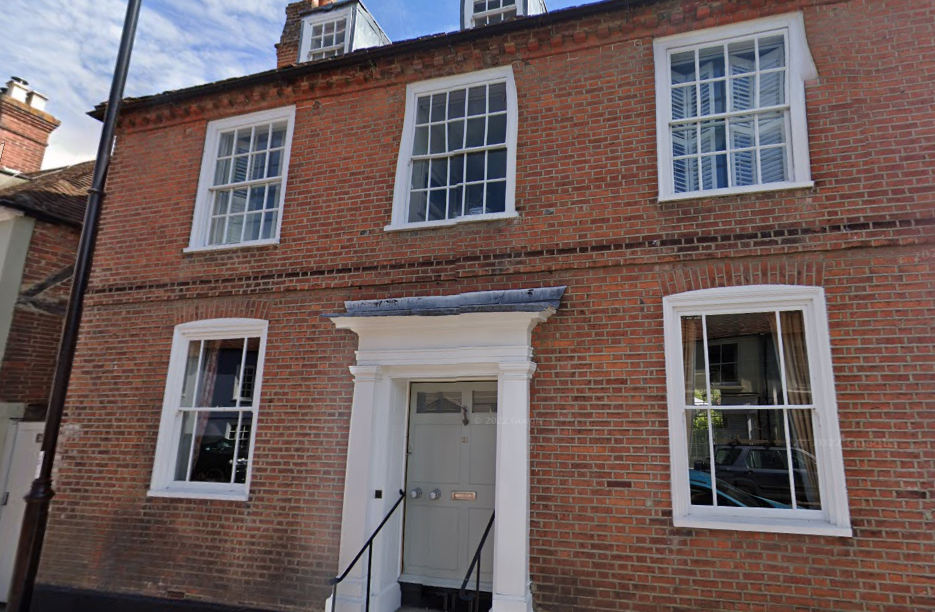
No. 23 specifically occurs twice elsewhere in the story of this street:
History of 21 Westgate
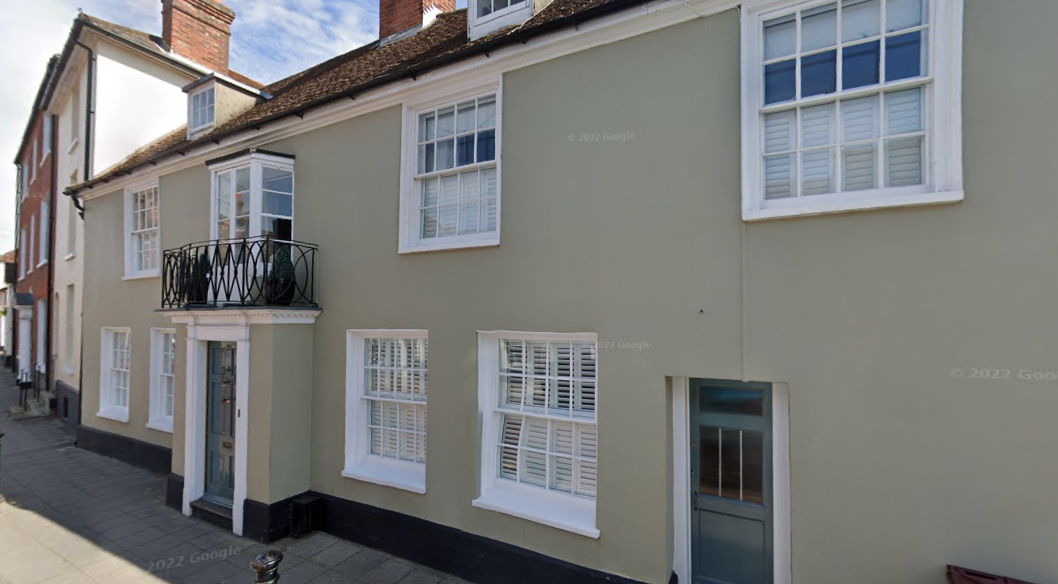
The history of this property has been constructed by Dr Brownfield from the property’s voluminous Schedule of Deeds, by kind permission of the current owners.
For the uninitiated (like me), “Messuage” was a term that referred to a dwelling house along with its adjacent buildings and the land used in connection. A word from late 14c. Anglo-French, it is thought to be a clerical error for “mesnage” (compare modern Fr ménage which means “household”)
Schedule of Deeds
History of 19 Westgate
History of 17 Westgate
Certain sections in this entry are copied with permission from The Building of Georgian Chichester by local historian Alan Green.
The Westgate house bo. 17 “was added to number 15 in about 1787 – on a more modest scale.”
The property “is a typical Regency rebuild. Its three-storey single frontage under a slate roof is stuccoed and the front door is recessed within an elliptical arch and approached by steps up from the street.
History of 15 Westgate
Newly built in 1730, this site had already been occupied by a house, a woodhouse, and a slaughterhouse. A malthouse was added by 1775.
In 1841 James Gates, a Yeoman Farmer aged 65, was living here. In 1861 another James Gates aged 59, a retired butcher who had had a shop in East Street was here. Presumably he was the son of the previous owner. In 1871 he is recorded as an alderman aged 67.